References & citations
The wiki's authority comes from sourced data. Attaching a reference is the single most useful thing you can do as a contributor.
What counts as a reference
- Primary sources— the breeder's own website, the PSA registry, a published horticultural reference, or a peer-reviewed paper.
- Secondary sources — reputable nursery sites, curated blogs, books, magazine articles. Acceptable for most fields, but Authoritative tier requires at least one primary source.
- First-hand observations with photosare useful but should be added as anecdotal notes, not as references — they're one perspective rather than a citable source.
Adding a reference to a page
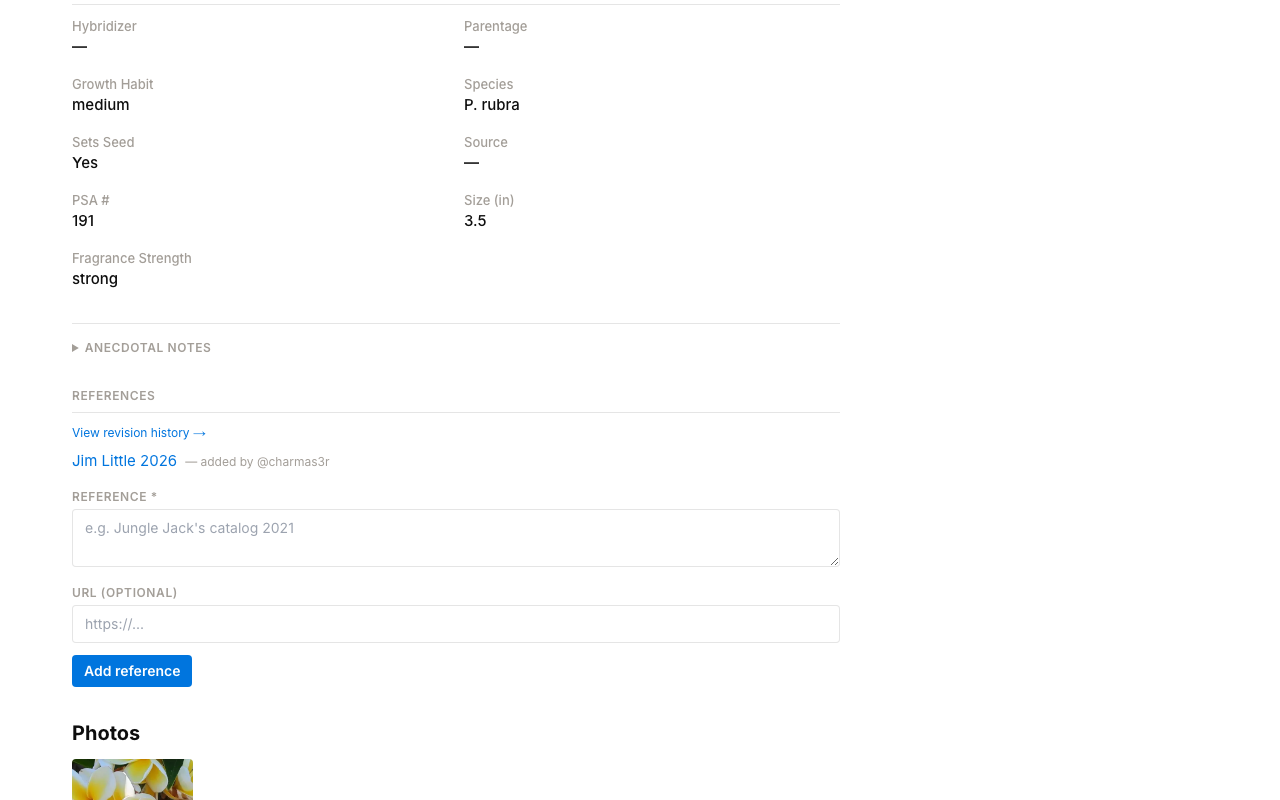
- 1Open the cultivar page and scroll to ReferencesThe References block is below the structured content, above the photo gallery.
- 2Click ‘Add reference’A small inline form appears. Paste the URL and write a short descriptive label (the site name, paper title, or a 1-line summary).
- 3SubmitReferences go through the same review queue as edits. If you're a verified breeder of this cultivar, your reference attaches immediately.
Inline references on edits
When you propose an edit to a field, the inline edit form lets you attach a reference at the same time. This is the preferred path — paired sources make admin review fast and keep edits and citations in sync.
Why multi-contributor matters
To reach the Authoritative tier, a page needs references from multiple contributors. One enthusiast with five sources is impressive but not authoritative — corroboration from an independent voice is what makes the difference. See Quality tiers.
Edge cases
Paywalled sources
Paywalled references are allowed, but only when a public summary, abstract, or excerpt exists somewhere a reader can verify the claim. Cite both — the paywalled primary and the publicly accessible secondary — so the page never depends on someone buying access to confirm its data.
Foreign-language sources
Foreign-language references are fine — plumeria literature is global. When you add one, include a brief English translation or paraphrase of the relevant claim in the label field so readers and reviewers know what the source actually says.
Archived pages
Web pages rot. When a primary source lives somewhere that might disappear (a personal blog, a small nursery site), preferring an archive.org snapshot in addition to the live URL keeps the citation usable long-term.
References on merged cultivars
When admins merge two cultivars (because they turned out to be the same plant under different names), references attached to the merged-away cultivar follow the canonical one — none are lost. They simply appear in the canonical page's references list alongside any references that were already there.